Araca Insights
Production analytics platform for semiconductor wafer polishing research
Semiconductor wafer polishing is a precision process where small variations in force, temperature, and friction determine whether a wafer meets spec or gets scrapped. Engineers were spending 100+ hours per study manually processing sensor data - copying numbers between spreadsheets, running calculations by hand, building charts one at a time, and formatting reports from scratch.
Araca needed a platform that could eliminate this manual work entirely: ingest raw sensor data, compute domain-specific metrics automatically, surface patterns through interactive visualization, predict outcomes with ML, and generate publication-ready reports in one click.
Platform-first thinking
Rather than building a collection of scripts, I designed Araca Insights as a platform - a layered system where the data engine, user interface, and analytics modules are decoupled and independently extensible. The first release targets desktop (where researchers work offline in lab environments), with a web-based version planned to enable remote collaboration and broader access.
Lab environments often lack reliable internet, and sensitive research data needs to stay local. Starting with a desktop app solved the immediate need while the underlying architecture is designed to support a web-based version for team collaboration and remote access.
Projects are fully self-contained and portable. Moving a project between machines or sharing with a colleague requires no reconfiguration - everything resolves automatically.
All data processing, metric computation, and report generation runs asynchronously. Users can continue working while bulk imports of 50+ experiment files or multi-chart reports are generated in the background.
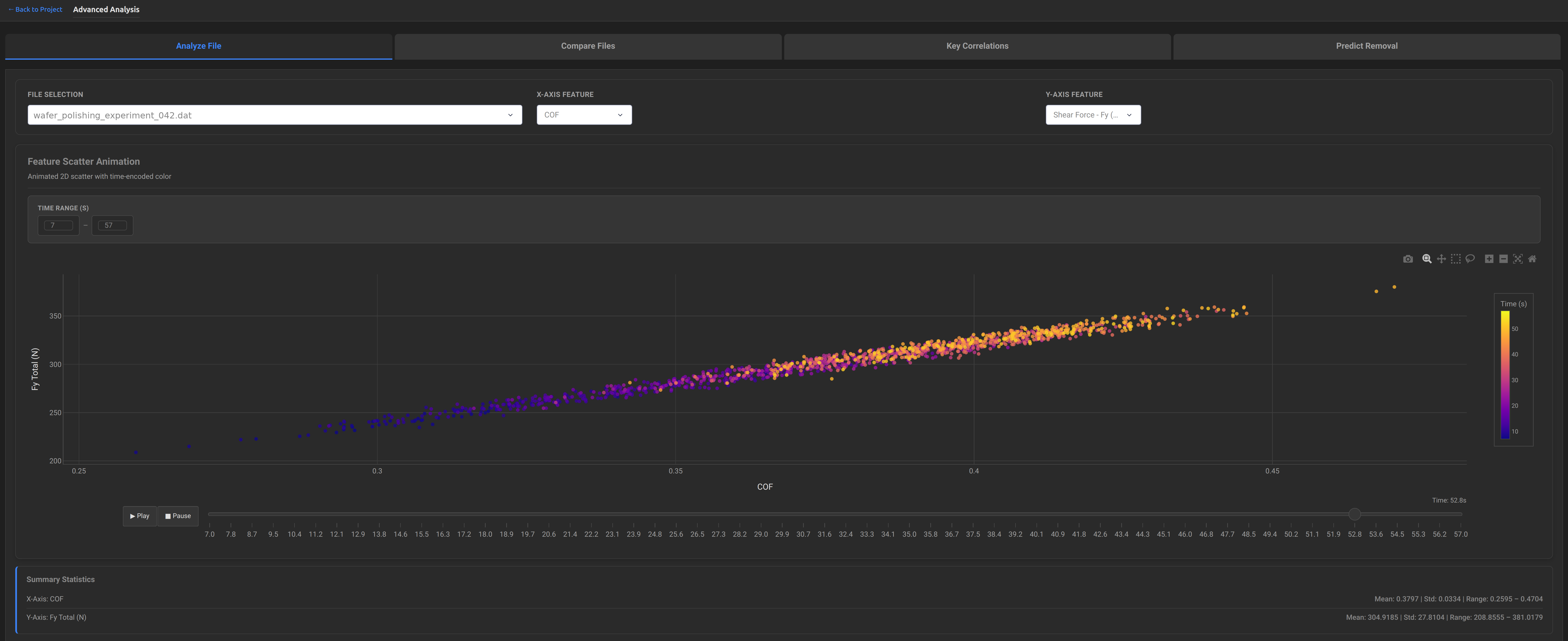
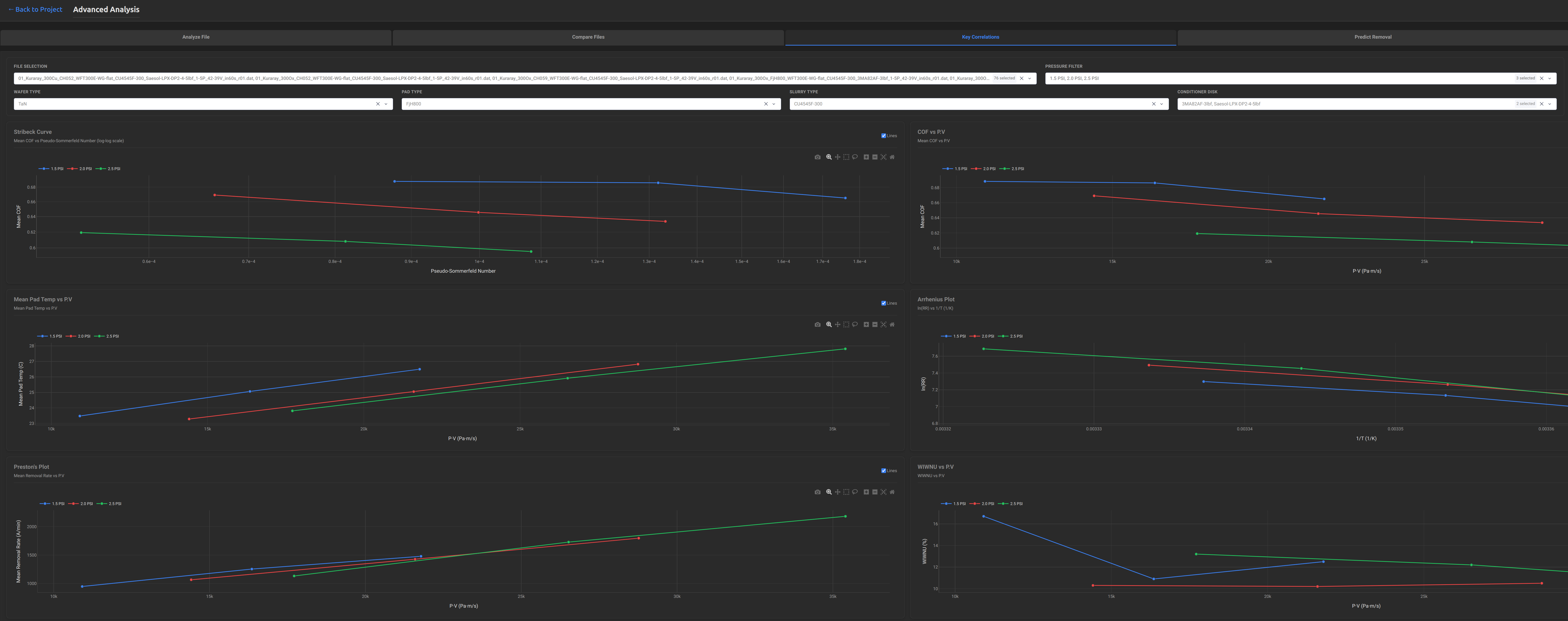
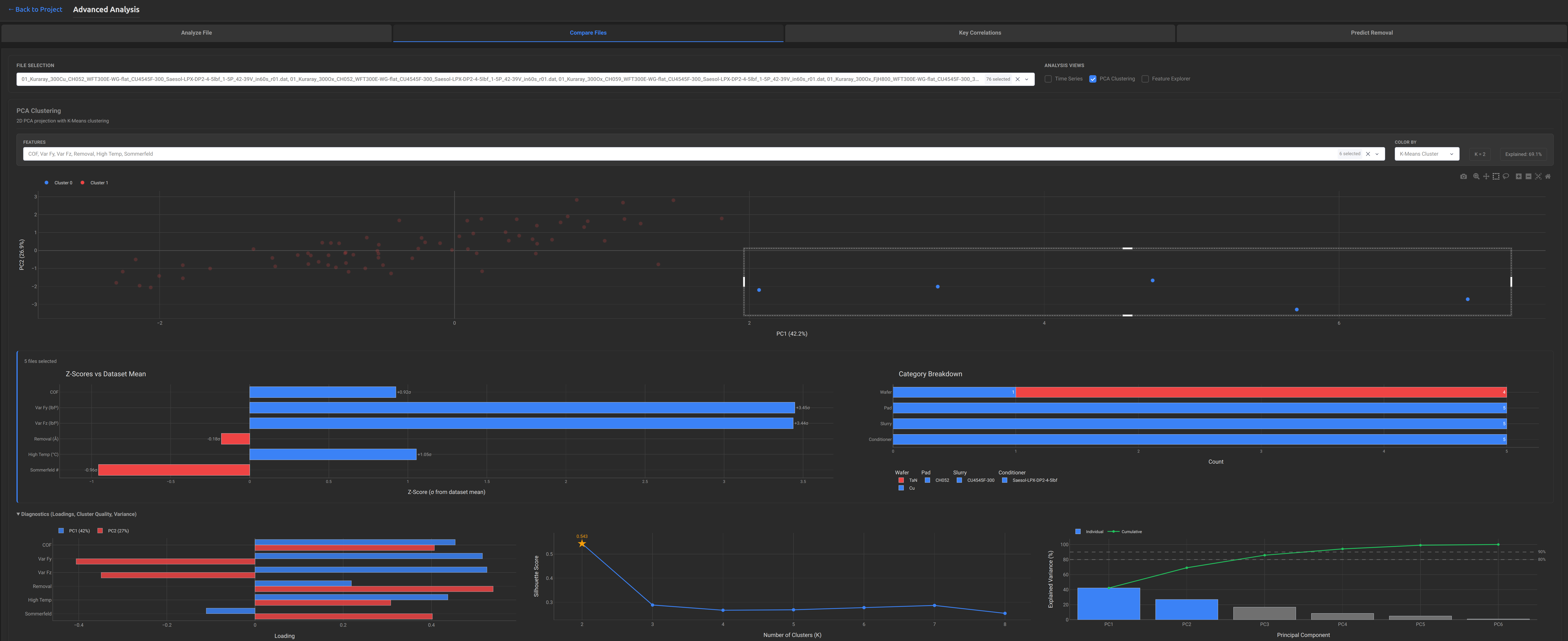
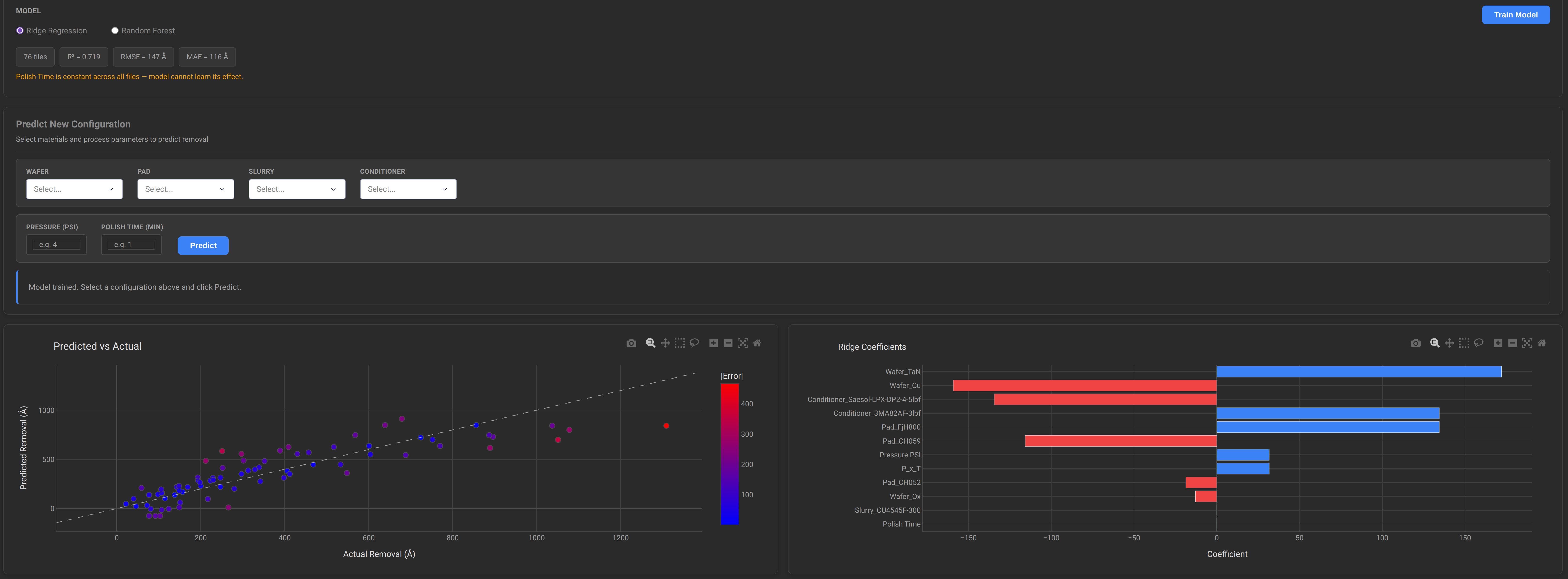
Animated feature scatter with time-encoded color reveals process evolution during polishing
What the platform does
Where we are
The biggest lesson from this project is the value of meeting users where they are. Researchers don't want to deploy web apps or learn new tools - they want something that opens, works, and gets out of their way. Starting with desktop was the right call for adoption, and the architecture is ready to expand to the web when the team needs collaboration features.
The AI assistant is the most exciting part of what's next. Domain experts generate insights that ML models alone can't, and the assistant bridges that gap by helping users ask better questions of their data and understand when model predictions should be trusted or investigated further.